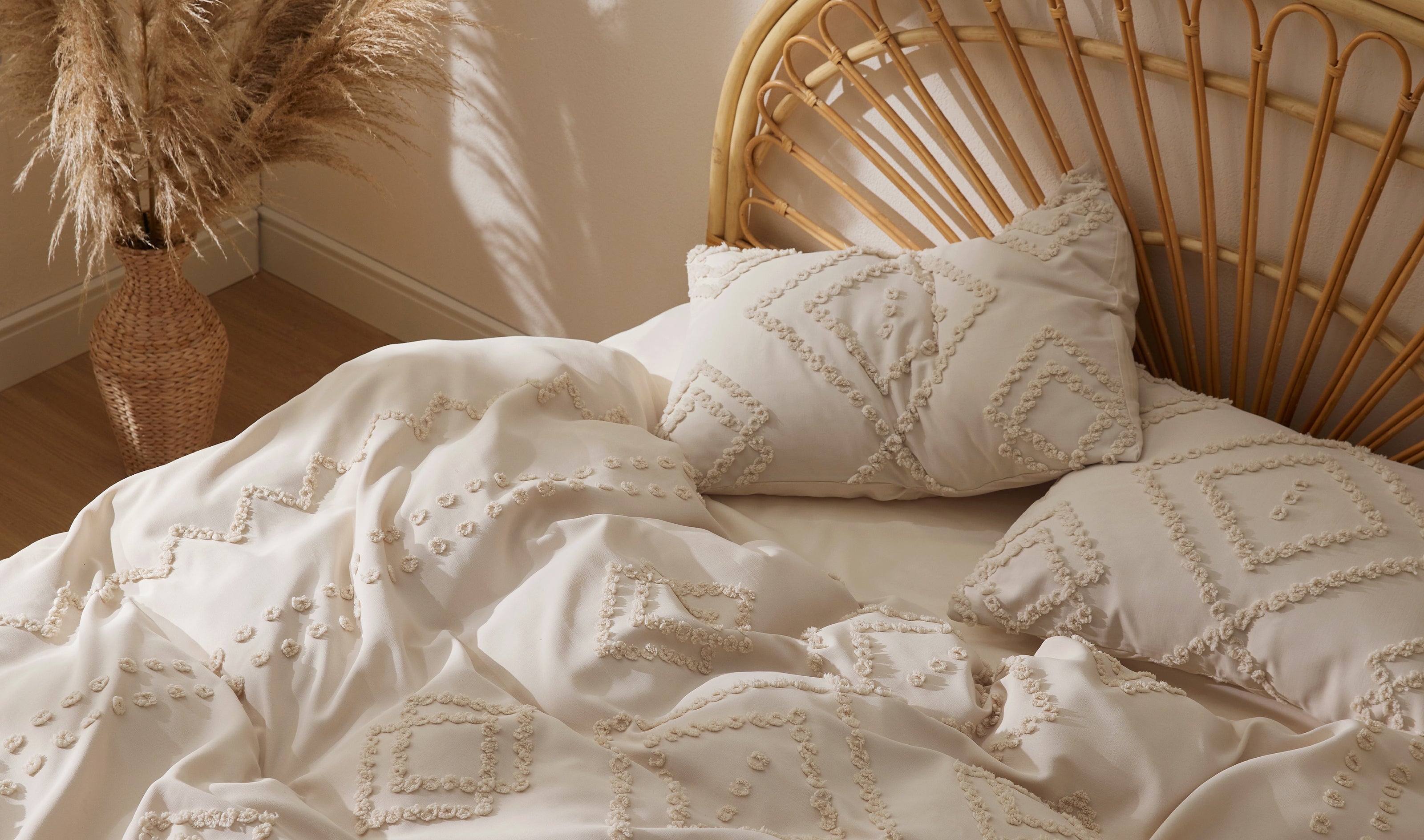
Silky, Soft, or Smooth: Why Sheet-Feel Vocabulary Means Different Things to Different Sleepers
Translate silky, soft, and smooth into distinct tactile expectations, then use fiber, weave, finish, and care to shop more precisely.
Use live exact-variant prices and one controlled, return-aware protocol to decide whether moving up a dynamic under-USD 50 tier buys a real benefit.
Diagnose fitted-sheet slipping by separating pocket coverage, elastic tension, and add-on anchoring.
Separate infant safe-sleep rules from the fit, care, and comfort choices that make the parents' bed easier to reset.
A hotel-style bedroom needs fit, layering, coordination, and a repeatable routine—not softness alone.
Rayon derived from bamboo is the stronger warm-sleeper starting point; microfiber can suit easy-care priorities.
Sheet fabric can change surface comfort, while room, layers, and the symptom's cause remain separate.
Treat rankings as priority-based decision aids, then verify material, fit, certification, care, and the live variant.
A practical checklist for comparing rayon-derived-from-bamboo sheet material, certification, fit, contents, care, and live variants.
Thread count numbers, an OEKO-TEX logo, and a "Good Housekeeping Seal" badge each answer a different question about a piece of bedding, and none of them are interchangeable proof of quality. This breaks down what each claim on a Bedsure product page actually verifies, where the underlying testing happens, and how to check any of it independently rather than taking a product description at face value.
Use a label-led troubleshooting sequence to separate normal fabric texture from residue, drying issues, friction, and wear before changing your wash routine.
Make your bedroom calmer and more comfortable without overspending by prioritizing bedding, controlling light and noise, and building better routines.