Skip to content
PureWoven™ and the Bamboo Label Problem: What Your Sheet Tag Still Doesn't Tell You

PureWoven™ and the Bamboo Label Problem: What Your Sheet Tag Still Doesn't Tell You

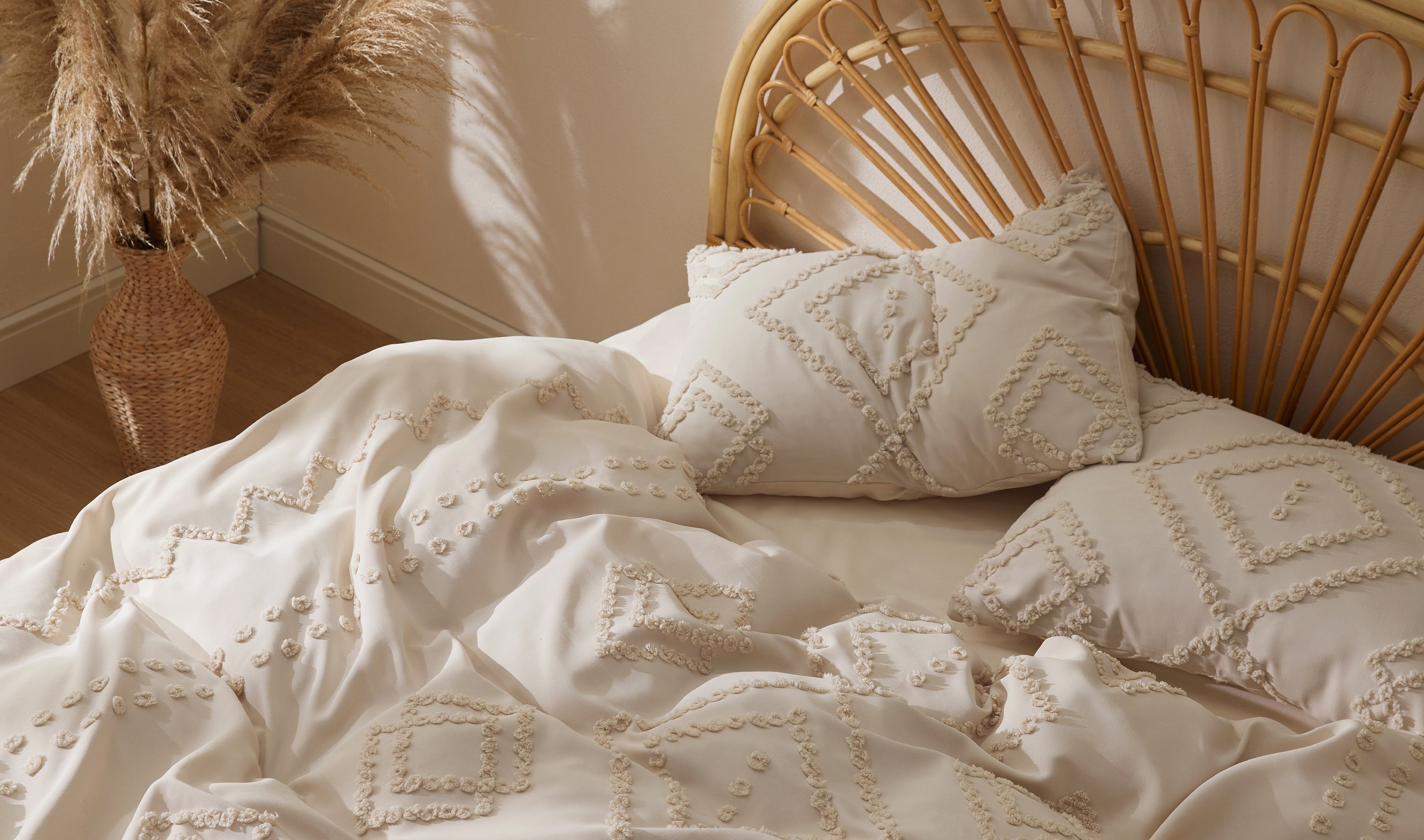
Bamboo sheets have become a mainstream bedding category, but most buying guides stop at the surface. They tell you to look for OEKO-TEX certification and move on. What they rarely cover is what the label still doesn't tell you: how the fiber was processed, what chemicals were involved, and what that certification actually certifies. This piece goes there. What the Label Is — and Isn't — Telling You The U.S. Federal Trade Commission requires that fabric made from chemically processed bamboo cellulose carry the label 'rayon (or viscose) made from bamboo' — not simply 'bamboo.' That's because the chemical process — dissolving bamboo pulp with sodium hydroxide and carbon disulfide — transforms the cellulose into a regenerated fiber that is technically classified as rayon, not bamboo in its natural state. The FTC has issued enforcement actions and civil penalties against brands selling textiles labeled simply as 'bamboo' without this qualification. So when a sheet tag says '100% Rayon Derived from Bamboo,' that's not a disclaimer — it's the legally required description. What the label can't tell you: the grade of bamboo pulp used, the exact chemical process, the rinse cycles, or whether residual processing chemicals were removed before the fabric was woven and finished. Two products with identical labels can have meaningfully different quality profiles. What OEKO-TEX STANDARD 100 Actually Certifies OEKO-TEX STANDARD 100 is a third-party certification issued by the International OEKO-TEX Association, which has operated since 1992 and is headquartered in Switzerland. A product bearing this label has been tested by an independent OEKO-TEX institute for the presence of more than 100 harmful substances — including formaldehyde, azo dyes, nickel, phthalates, allergy-inducing colorants, and synthetic softeners. Critically, every component is tested: the fabric, the thread, the dyes, the finishing treatments. A product cannot carry the label based on one material alone. For bamboo rayon specifically, this matters because the viscose manufacturing process involves chemical solvents. A fabric can be sourced from bamboo and still carry residual processing chemicals if the finishing steps are insufficient. OEKO-TEX certification — tested by an independent institute — confirms that the finished product, in the form it reaches you, meets human-ecological safety thresholds across all tested substance categories. The certification is organized by product class based on skin contact. The most stringent class (Class 1) is for products intended for babies and toddlers under 36 months. Bedding typically falls into Class 2 (direct skin contact) or Class 1 if positioned for sensitive-skin applications. Brands must renew their certification and can lose it if production processes change — it is not a one-time approval. What OEKO-TEX STANDARD 100 tests: Formaldehyde (regulated finish chemicals) Azo dyes (certain colorants that can release carcinogenic amines) Heavy metals including nickel, lead, and chromium Pesticide and herbicide residues from the source plant pH value and color fastness Phthalates and other softeners used in textile finishing The PureWoven Sourcing Difference Bedsure's PureWoven Bamboo Sheet Set is constructed from 100% rayon derived from bamboo. The product is certified under OEKO-TEX STANDARD 100 — meaning the finished sheets, not just the raw fiber, have passed independent safety testing for harmful substance limits across all components. What distinguishes the PureWoven from generic bamboo sheet sets comes down to construction: 16-inch deep pockets with elastic grip — necessary for most modern memory foam and hybrid mattresses — and an envelope-back pillowcase cut that reduces overnight friction against hair and skin. These are practical specifications that separate well-made bamboo sets from generic alternatives at similar price points. What Buying Guides Usually Skip: Three Questions Worth Asking Most bamboo buying guides end at 'look for OEKO-TEX certification.' That's a solid starting point, but it's also where the depth disappears. Here are three more specific questions worth applying to any bamboo sheet purchase: Is the certification current and verifiable? OEKO-TEX certifications are publicly verifiable using the label check tool at oeko-tex.com. Any product claiming the certification should be able to provide a certification number. A vague 'OEKO-TEX certified materials' claim without a verifiable number is not the same as a certified finished product. What's the finishing process — and how many pre-wash cycles? Bamboo rayon fabric that arrives stiff, slick with finishing treatments, or chemically odorous has not been adequately prepared for the consumer. Pre-washing removes finishing agents and initiates the softening process before the sheets reach your bed. It also reduces the shrinkage that happens on a first home wash. Does the product specify pocket depth and elastic construction? A 16-inch or deeper pocket is necessary for mattresses 12 inches or thicker — which describes most modern memory foam and hybrid options. Standard 12-inch pockets pull loose within weeks on thick mattresses, causing the fitted sheet to drift and bunch during sleep. Bamboo Rayon vs. Microfiber Sheets: What the Difference Actually Means for Hot Sleepers When comparing bamboo rayon against microfiber — one of the most common alternatives at similar price points — the performance gap is worth understanding before you buy. Bamboo rayon is a cellulose-based fiber with documented breathability and moisture-wicking properties. A 2021 study published in Polymers confirmed high thermal conductivity and breathability in bamboo fabrics, properties directly relevant to hot sleepers. Microfiber performs differently — it tends to trap more body heat and is less moisture-permeable. This doesn't make it a bad material (it excels in affordability, durability, and wrinkle resistance), but for hot sleepers and those prioritizing moisture management, the performance profiles are not equivalent. Who PureWoven Bamboo Sheets Are — and Aren't — For PureWoven sheets are well-positioned for anyone who runs warm at night, sleeps in a room that fluctuates seasonally, has fine or damaged hair they want to protect overnight, or has had consistent allergic or chemical reactions to chemically finished bedding. The OEKO-TEX certification and 16-inch deep pocket construction address the two most common quality-gap concerns in this category. If you prefer a crisp, cool, matte texture — the feel percale cotton delivers — bamboo rayon is not the right match. A 300 to 400 thread count single-ply percale set in long-staple cotton will serve you better. For everyone else — hot sleepers, sensitive skin, or anyone who prefers a silky, heavier drape that softens with each wash — bamboo rayon is the stronger choice. How to Wash and Care for Bamboo Rayon Sheets Machine wash in cold water — hot water breaks down bamboo rayon fibers faster than any other care mistake. Tumble dry on low heat and remove sheets while still slightly warm to reduce wrinkling. Skip fabric softener entirely: it permanently coats the fiber structure and reduces moisture-wicking performance over time. If sheets arrive with a faint chemical odor, a second cold wash before first use resolves it — this is residual finishing treatment, not a defect in certified products. Frequently Asked Questions Is 'rayon from bamboo' the same as organic bamboo? No. 'Organic bamboo' typically refers to bamboo grown without synthetic pesticides, which relates to how the plant was farmed. 'Rayon from bamboo' describes the fiber manufacturing process. A sheet set can be OEKO-TEX certified (confirming the finished product is free of harmful substances) without carrying an organic designation — and vice versa. Can I verify an OEKO-TEX certification myself? Yes. The OEKO-TEX label check tool at oeko-tex.com/en/label-check allows you to input a certification number and verify the certification status, scope, and issuing institute. Why shouldn't I use fabric softener on bamboo sheets? Fabric softener should not be used on bamboo sheets because it deposits a coating on the fiber surface that permanently reduces moisture-wicking and breathability. Over time, softener-treated bamboo sheets will feel less cool and take longer to dry — negating the primary performance advantage of the material. What sizes does the PureWoven Bamboo Sheet Set come in? The PureWoven Bamboo Sheet Set is available in Twin, Twin XL, Full, Queen, King, and California King. Current pricing and size specifications are listed at bedsurehome.com. References [1] Federal Trade Commission — Bamboo Textiles (April 2015): https://www.ftc.gov/bamboo-textiles [2] SGS — US FTC Fines Companies for False Labeling on So-Called 'Bamboo' Textiles (May 2022): https://www.sgs.com/en/news/2022/05/safeguards-06322-us-ftc-fines-companies-for-false-labeling-on-so-called-bamboo-textiles [3] OEKO-TEX® — OEKO-TEX STANDARD 100 Official Overview: https://www.oeko-tex.com/en/our-standards/oeko-tex-standard-100/ [4] Copenhagen Bamboo — What is OEKO-TEX Standard 100? (September 2022): https://copenhagenbamboo.com/pages/what-is-oeko-tex-standard-100 [5] QforQuinn — OEKO-TEX Standard 100: What It Tests, Limit Values & Certifies (May 2025): https://www.qforquinn.com/blogs/news/what-is-oeko-tex-certified [6] B the Change — How Viscose Rayon Fabric Masquerades as Bamboo Clothing (March 2017): https://bthechange.com/how-viscose-rayon-fabric-masquerades-as-bamboo-clothing-b-the-change-media-89f0e3038179 [7] PMC / Polymers — Moisture Vapor Permeability and Thermal Wear Comfort of Ecofriendly Fiber-Embedded Woven Fabrics (September 2021): https://pmc.ncbi.nlm.nih.gov/articles/PMC8539243/ [8] Technology Textiles — Bamboo (FTC Fiber Labeling Reference): https://www.technologytextiles.com/bamboo.html [9] Bedsure — PureWoven™ Bamboo Sheet Set (Official Product Page): https://bedsurehome.com/products/rayon-derived-from-bamboo-sheet-set [10] Bedsure Blog — Rayon Derived From Bamboo vs Organic Bamboo Viscose vs Bamboo Cotton Blend (April 2026): https://bedsurehome.com/blogs/bedsure/bamboo-rayon-vs-organic-viscose-vs-blend  

Keep reading