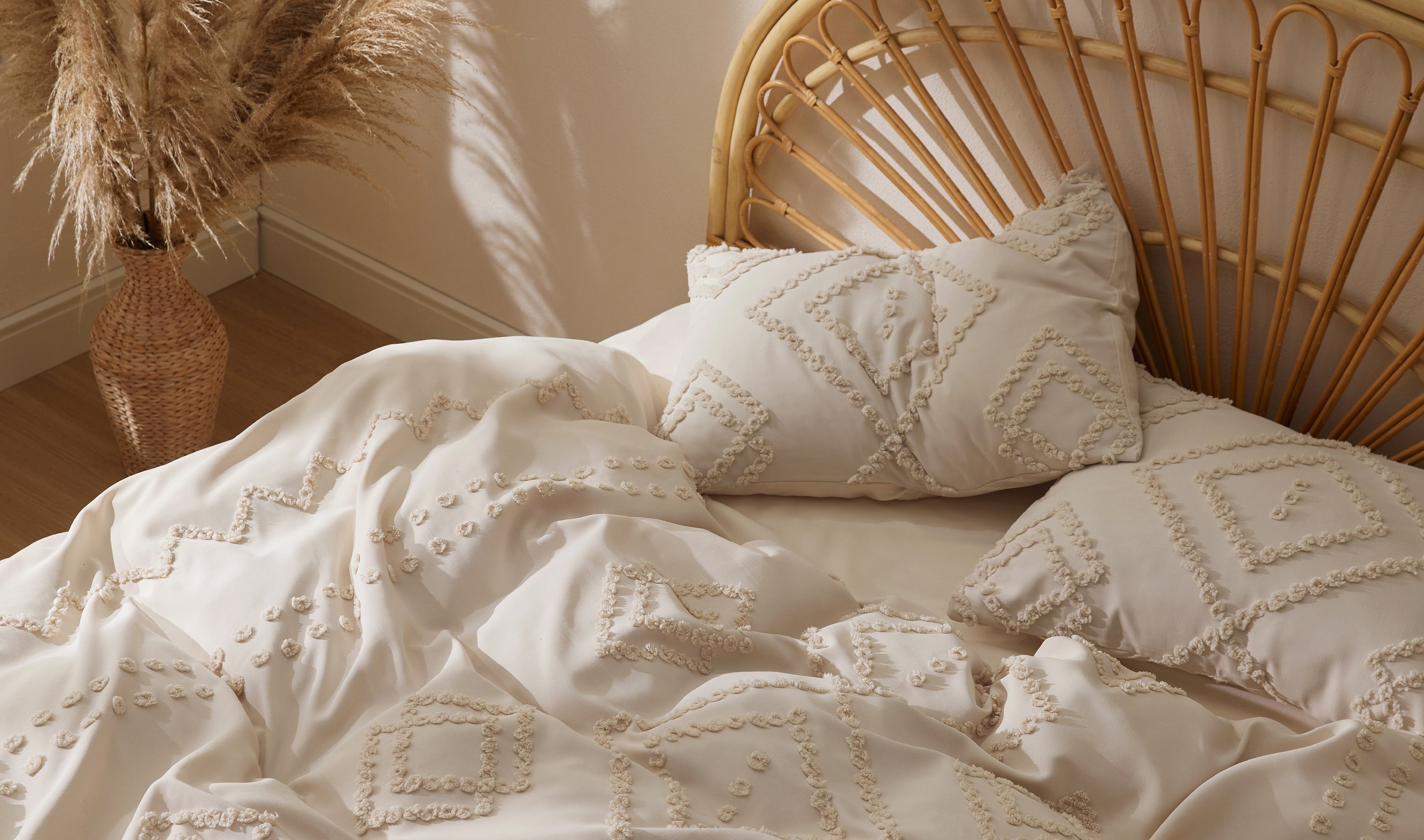
How to Build a Cozy Bedroom on a Budget: A Practical Bedding Hierarchy
Build a cozy bedroom on a budget with Bedsure’s practical bedding hierarchy, from sheets and comforters to covers, pillows, and easy-care upgrades.
Learn how deep pocket sheets, corner ties, and hidden zippers improve bedding fit, reduce shifting, and make sheets and duvet covers easier to use.
Learn why blanket GSM alone does not determine warmth, and how fabric texture, fiber type, weave, and room temperature affect cozy bedding comfort.
Compare washed cotton vs regular cotton for duvet covers, including softness, breathability, shrinkage, care, and when each fabric works best.
The Bedsure SleepEase combines a 0.425 Q-max rating with breathable CASTOR fiber fill to naturally lower your sleep microclimate without breaking the bank.
Learn how to use a comforter with a duvet cover, secure corner ties, reduce shifting, and decide when a duvet cover or comforter works best.
Stop night sweats with breathable natural fibers like linen, cotton percale, and lyocell. Learn how weave, thread count, and weight impact your sleep quality.
Not all bamboo sheets are truly natural. We break down the chemical processes, closed-loop manufacturing, and how to choose the best cooling bedding.
High thread counts often hide low-quality, multi-ply yarns. True bedding comfort depends on matching the right metric—GSM or thread count—to your fabric.
Stop swapping bedding every season. Find your sleep temperature profile — hot, cold, seasonal, or variable — and build one year-round setup that actually works.
Bamboo is cooler and softer — but what do the buying guides leave out? Five honest trade-offs across softness, cost per night, wrinkling, care, and winter warmth.
Understand Bedsure PureWoven bamboo sheet labels, what fabric terms mean, and how to compare bamboo, rayon, viscose, and cotton for sleep comfort.